• About Me

Cycle Seattle

~ Posts on bikes

Cycle Seattle

Author Archives: Brian Hanson

Image

A. Homer Hilsen 7-year Review

04 Monday Jan 2016

Tags

a. homer hilsen, ahh, bike, commute, cycling, harlequin wrap, nitto, porteur, randonneur, rivendell, Seattle


My first real thoughtful bike purchase was the Rivendell A. Homer Hilsen.  Color – metallic copper – one of the web frame specials in 2009 shortly after I moved back to Seattle from a brief 18-month foray to my childhood home of Minnesota.  I had been commuting on a ’96 Kona AA that I was pretty much done with.  The aluminum frame never felt right – too stiff. I was ready for a real road bike after spending much of the prior 20 years on a mountain bike.
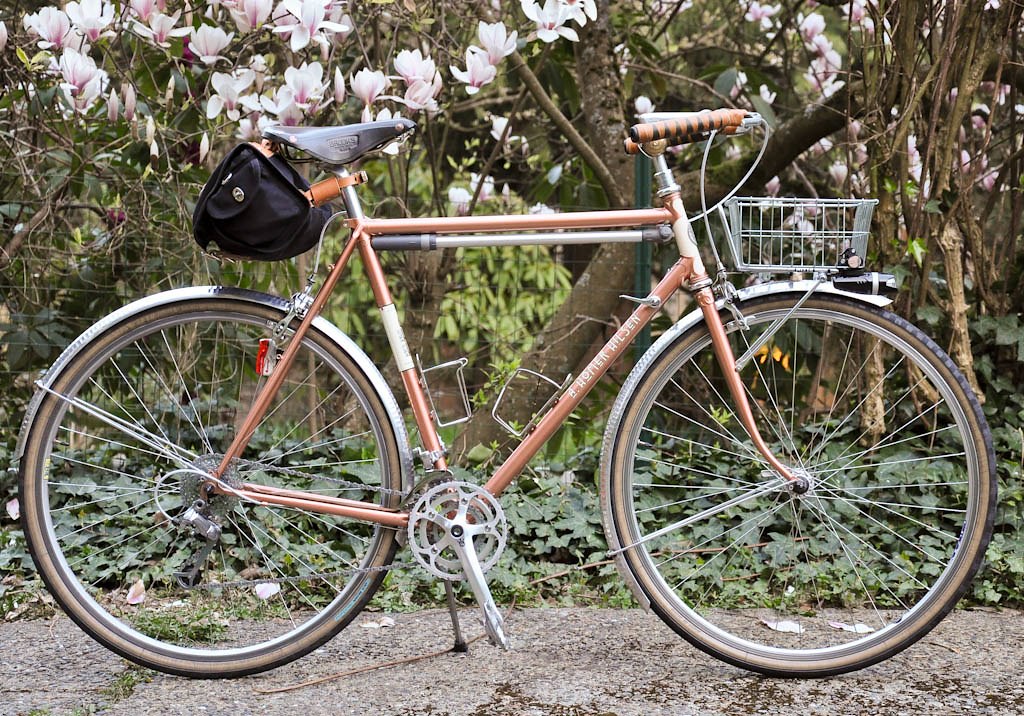
Hilsen-1

2nd Build – still a favorite

I did a lot of research, but after I found the Rivendell site, started reading Sheldon Brown and Grant Petersen’s opinions, and did some test rides on a local friend’s vast collection of Riv bikes, I was smitten.  I recall going to the Seattle Bike Show in 2008 and walking around forlorn, seeing nothing attractive.  At all.

At that point, I knew a couple things about myself:

  1. Steel felt right.  I grew up riding this material.  My Raleigh Reliant, and Stumpjumper Pro (’91) were my benchmark rides.
  2. I wasn’t planning to pick up racing.  I am a recreational and practical cyclist.
  3. Damn those lugged frames were pretty!  They really hit a “homer” in terms of where my aesthetic sensibilities were concerned.
  4. I wanted to build this bike myself from the frame up.

I started watching the Riv site and decided the copper Hilsen was the one.  It was a 59cm frame, and although I would probably fit up to a 61cm, this was as big as I wanted to commit to.

After a few months of collecting the parts and tools needed to put this together, I took it for the first ride and was amazed at the effortless speed compared to my mountain bikes. At about the same time, I had also stumbled on the  RBW owners bunch online community, which helped me navigate a first bike build, as well as sharing lots of good technical advice.

Here was a large community of like-minded folks generally oohing and aahing all the builds folks were doing.  This tight-knit community is one known for being a polite and caring group, and I’m happy to count many of the folks there as friends.
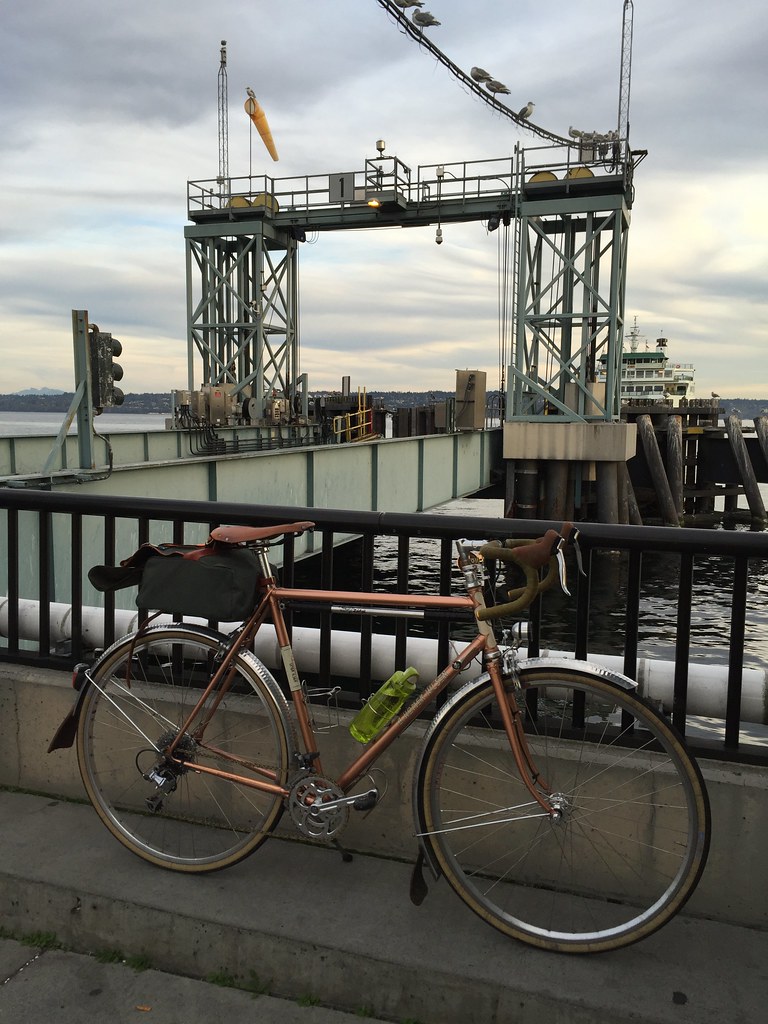
Untitled

Favorite Bike in Current Config

The Hilsen took me on my first 100k brevet, and then my 200k.  Then my 300k.  It helped me learn that I like the Selle Anatomica Titanico saddle best on anything over 100 miles.  It showed me that clipless pedals were not necessary anymore.

I briefly became caught up in the low-trail Jan Heine camp, and picked up another rando bike (the Toussaint), but after all these years, the one bike I still enjoy the most is the A. Homer Hilsen.  It is still as lovely as ever, and gaining beausage every year.  It still gets more comments on my daily commute, rain or shine.  After riding other bikes for several months, and then coming back to this one, it still feels “just right”.  The ride is smooth, predictable, natural.  I never feel like it has quirks, defects, or limitations that I’ve noticed on lesser bikes.

It has done brevets, snowy singletrack(!), loaded commutes, and just riding trips.  Handled ’em all with aplomb.  ’nuff said…

Posted by Brian Hanson | Filed under Cycling, Northwest, Randonneuring
≈ 15 Comments

Image

2015 and On

03 Sunday Jan 2016

Tags

cycling, goals, Oregon Outback, randonneur, ride stats


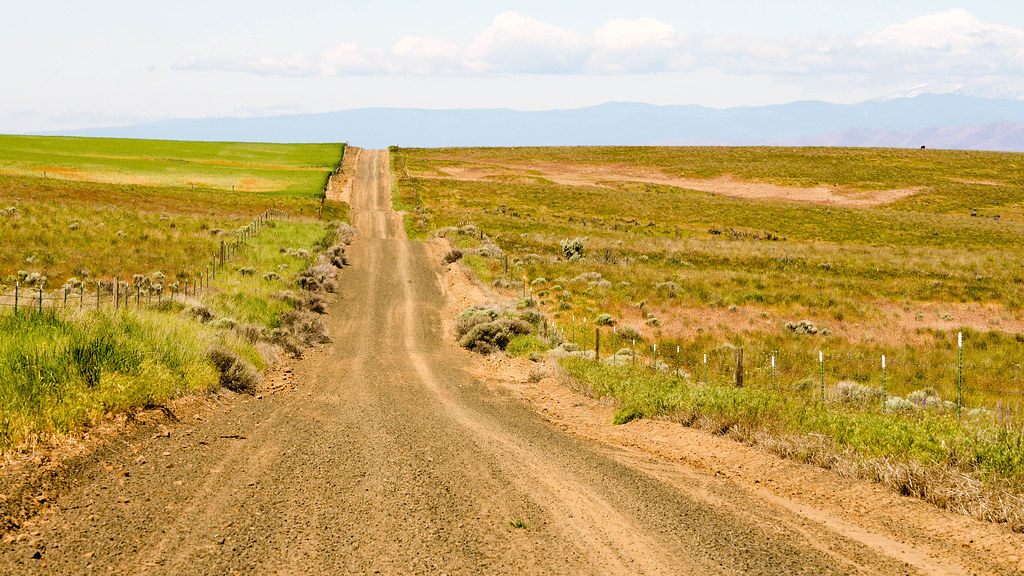
I took the year off randonneuring in 2015.  Not one timed ride.  No real reason other than I was not feeling “scheduled in” for most of the big rides.  That said, most of my training was for the Oregon Outback ride.  May also happened to be my all time mileage month.

BH-110.jpg

Out back

Mileage is gradually becoming meaningless for me, and if it weren’t for a natural interest in stats, and smartphones making it easy to record rides, I would be perfectly happy guessing, or better yet not worrying about it.   That said, I still lead a team at work for our local Ride Months in May and November.  I guess it’s tough to give up old habits, and I like to encourage folks to get out and ride.

Stats for 2015:

  • Total Distance: ~2592 miles
    • Best Month: May – 605 miles
    • Least: December – 55 miles
  • Total Elevation Climbed: ~108,837 feet
  • Total Riding Time: ~8 days and 9 hrs (over 200 hrs)
  • Number of Rides: 201
  • Ave Speed: ~12.9 mph
  • Ave Ride Distance: 12.9 miles
  • Ave/Max Heart Rate: 145/184 bpm

The prior two years:

  • Total Distance: over 3000 miles
  • Total Riding Time: ~220 hrs

All in all, a bit of a down turn, but I plan to put in some rando time this year with a goal of eventually doing some of the longer distances, and at least hit a total of over 1000 miles of rando distance.

Posted by Brian Hanson | Filed under Cycling, Northwest, Randonneuring
≈ Leave a comment

Image

Front Derailleur Destructor

03 Sunday Jan 2016

Tags

a. homer hilsen, campagnolo, centaur CT, CX-70, derailleur, rivendell, Shimano


Blast from the past post…

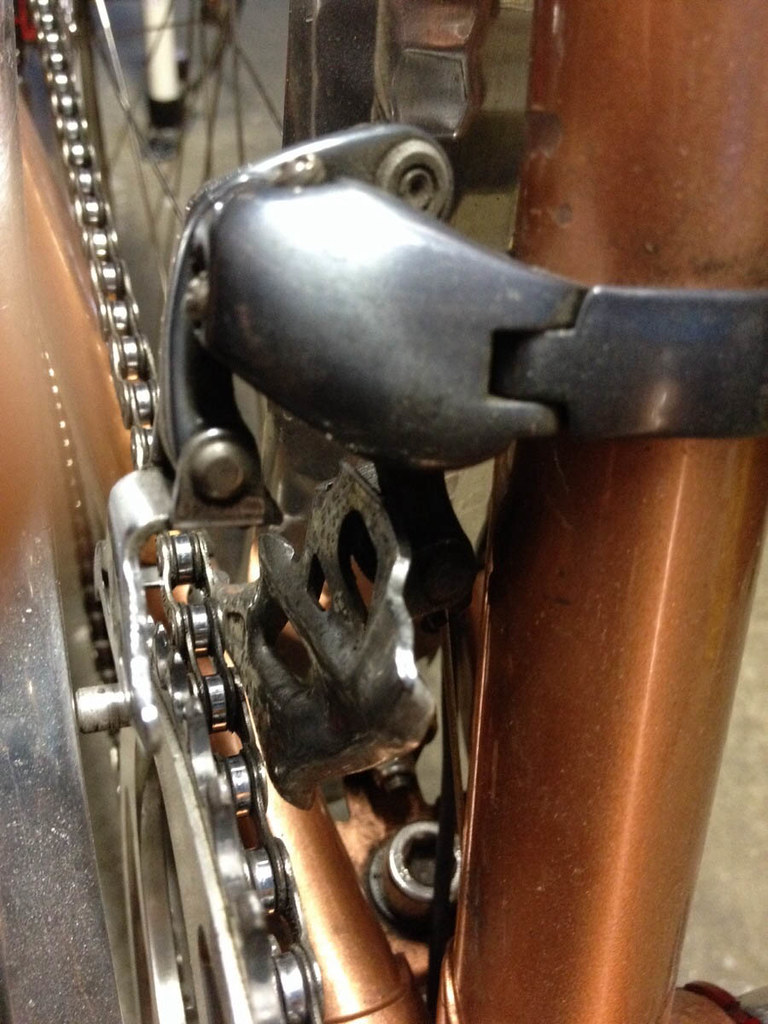
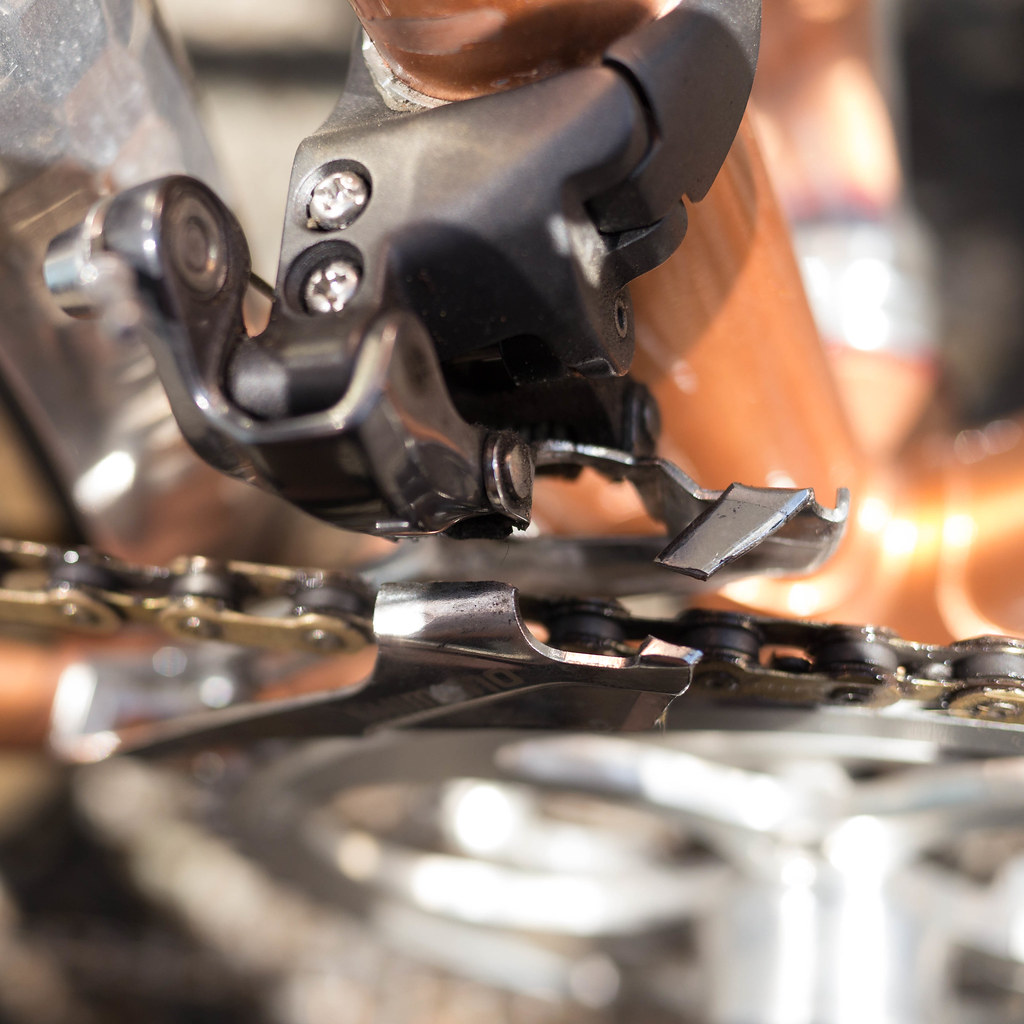
I’ve had two derailleurs on my Hilsen self destruct.  The first on a 300k keeping me in the big ring for the 2nd half of the ride.  The second on a commute home.  Different manufacturers, same bike and crank/chainrings.  Strangely, they both broke in August – exactly one year apart.  The other strange thing here, I have the exact same crankset on my Vélo Routier, and have never had an issue.  It uses an older derailleur – Suntour XC Pro, however.

I’ve gotten advice from “ignore it – probably just unlucky” to “need a stronger derailleur”.  Something is going on here.  I have always been careful to align the derailleur within 2-4mm of the outer chainring.  Perhaps this bike just needs a 1×10?  I’ve never had another bike destroy even one front derailleur, so I was suspicious of the following:

  1. Chainring 16 tooth spacing (44t – 28t) too great a jump
  2. Chainring thickness (chain seemed to stick to big chainring)
  3. Derailleur construction

On to the specifics:

The first one let go on a 300k brevet on August 4th, 2013.  It was a Shimano CX-70.  Luckily it happened after my big climb for the trip up to Artist’s Point on Mt. Baker.

BH-1.jpg

Popped on the outside

As you can see, the outer cage popped out at the top with a fairly clean break.  To be fair, I had several instances of chainsuck over the prior year that spread the derailleur apart.  To fix, I would just push the cage back into the normal shape after I re-railed the chain.  I assume it finally fatigued to the point of failure after the last chainsuck.

I then mounted a Campagnolo Centaur CT that had worked well on other bikes.  This lasted for approximately 1 year, but then self destructed in much the same way on August 12, 2014, breaking on the upper inside plate.

BH-1.jpg

Popped on the inside

At this point, it was clear that the shifting pressure was too much for these modern derailleurs.  I decided to swap the big ring from a 44t to a smaller 42t so the gap was not as great.  With an inner ring of 28t, I dropped the spread from 16t to 14t with the hope that it would not be as much distance to push, however, the problem always happened when dropping the chain from the large ring to the small.  I had an extra CX-70 that I put on this bike.  It came from the Hunqapillar, which had never mis-shifted or chain-sucked while it was mounted.

A year and a half later, and all is well.  No sign of problems with the new CX-70, and no further instances of chain-suck.  I have a feeling it was the large chainring causing the problems.  C’est la vie.  One of the more frustrating things about biking (and food/diet) is the sparse amount of useful information out there.  Anyone else had front derailleurs go boom on a road bike?

Ah, the simple days of not having to worry about shifts.  Tech will get us there again, soon.  Can’t wait for the variable ratio belt drive bike that you can control with your embedded chip.


Posted by Brian Hanson | Filed under Cycling, Randonneuring

≈ 2 Comments

Image

New Toussaints

23 Wednesday Dec 2015

Tags

bicycle, commute, cross, Cycles Toussaint, gravel, pavé, randoneurring, Velo Routier


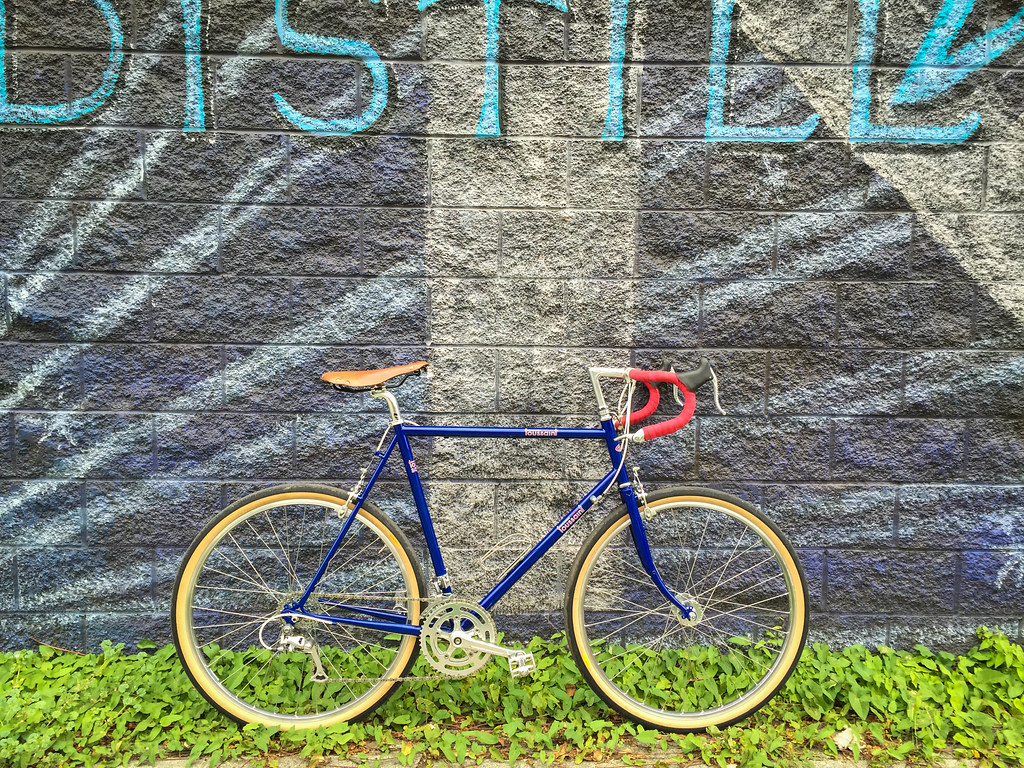
Our northern buddies at Cycles Toussaint in Calgary have introduced a new Vélo Routier.  I took one out for a spin to see how it compared to my v1 bike.

BH-2.jpg

V2 Vélo Routier

My first impression was that it felt just like my Vélo Routier. I’m not sure that I would be able to tell the difference in a blind test. It felt planted and quick steering.  Comfortable, not quirky.  This was set up similar to my own bike, with a Selle Anatomica, Noodles, bar-end shifting, and Compass tires.  This geometry just works for me.  Nice bike, great brakes.  They offer the v2 in 2 versions – one with braze-ons, and one without.  I really like the braze-on centerpulls and the quirky seat-stay pump mount, so that would be my choice.  The blue color is a nice change, too.  One new quirk – there is a slotted rear axle mount now, to better accommodate IGH or fixed/single gear hubs.  While this opens up the bike to more options, it may make bikes with fenders tougher to change out a flat on, but there are ways around the problem.

BH-4.jpg

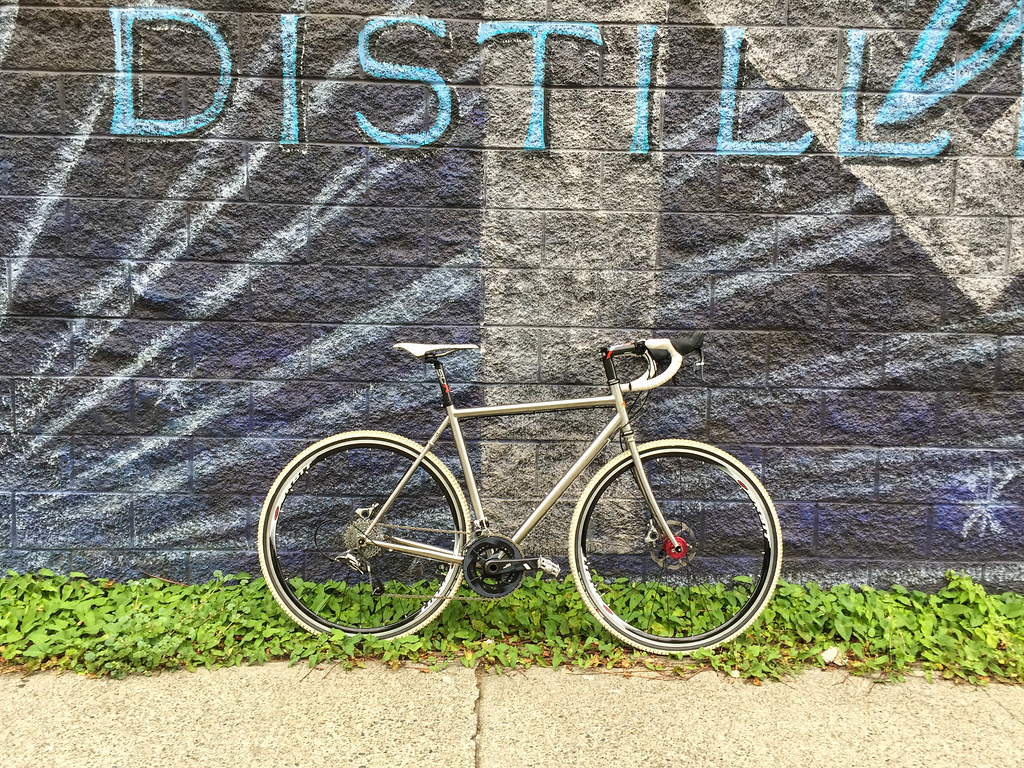
Toussaint Pavé

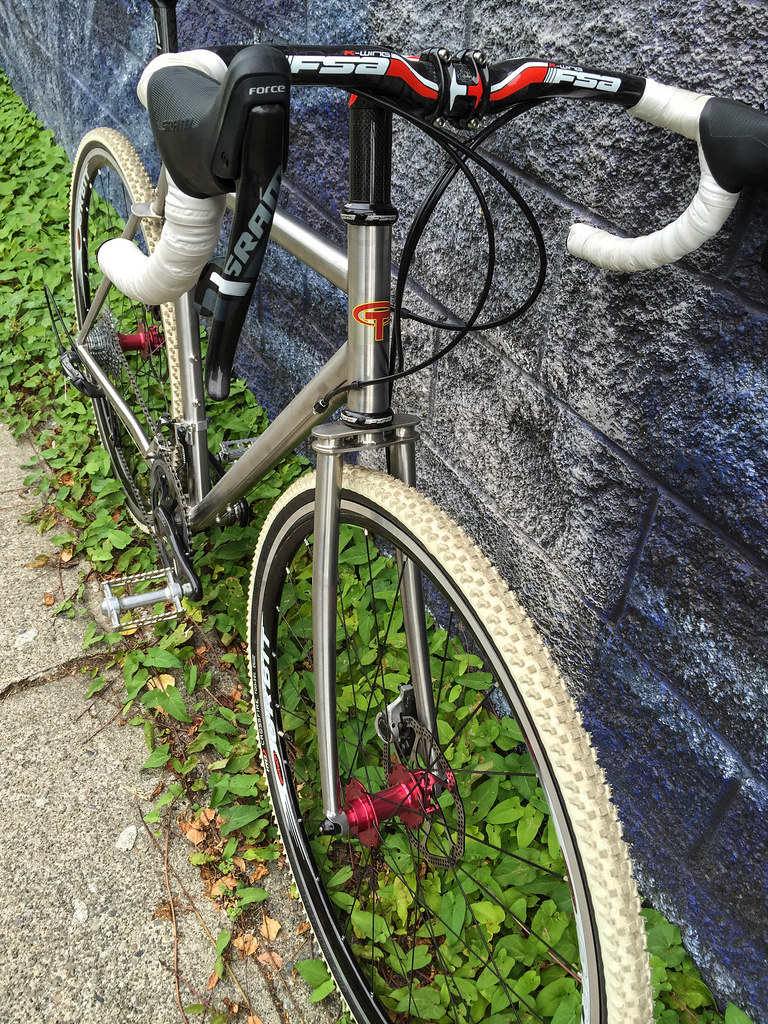
The next bike is a demo that is a new direction for Toussaint.  I believe this is an all-round road/gravel, maybe even cross bike.  It was set up racier than I would typically ride, but it was surprising in a number of ways.  The tubing is all stainless steel, which gives it a fairly “ti” look.  The downtube is quite oversized, as well, at 38.1mm. This seems overly stiff for my weight range, but can be offset with cushy tires. It is spec’d to take a 45mm fender, so I would assume you could put the Compass Barlow Pass tires on with no problems. It looks like a Clement MSO would fit fine for a bit more bite.

Toussaint used interesting plated fork and seat stay crowns. I like the classic low fork bend of the Routier more. To my eyes, it would be a great match for the double plate crown on this bike. The “banana” bend just looks odd to me.  I assume it makes the disc attachment easier/stiffer, but if the bike could use a more classic bend here, it would be prettier.


BH-5.jpg

Double Plate Crown

Disks make it a great utility rain bike.  I found the bike to be quite like the Vélo Routier in feel – even with a bit more trail on the Pavé (45mm).  It still felt quick steering, and was light and fun to ride. I was wondering how it would be with some front or rear load. I may see if I can get an extended trial to find out.

BH-6.jpg

Seat Stays

After the ride, I am hopeful this bike would fall into a similar price range as the Vélo Routier – if you could get a bike built for the rainy NW commute, not have to worry about rust or wet brakes, and still maintain great geometry that would handle randonneuring or lightly loaded gravel adventure rides – nirvana, right there!

The Toussaint blog (with lots of good info on the tubing, geometry, etc…) is saying they hope to sell these for around $2000, so I guess the tubing makes a big difference, but we’ll see what happens if they do a production run. This is a cool, practical bike!

Posted by Brian Hanson | Filed under Cycling, Northwest

≈ Leave a comment

Image

Soft Shoes on the Hardpack

05 Saturday Dec 2015

Tags

bikepacking, cruzer, offroad, Oregon Outback, sneaker pedals, sneakers, vp-001


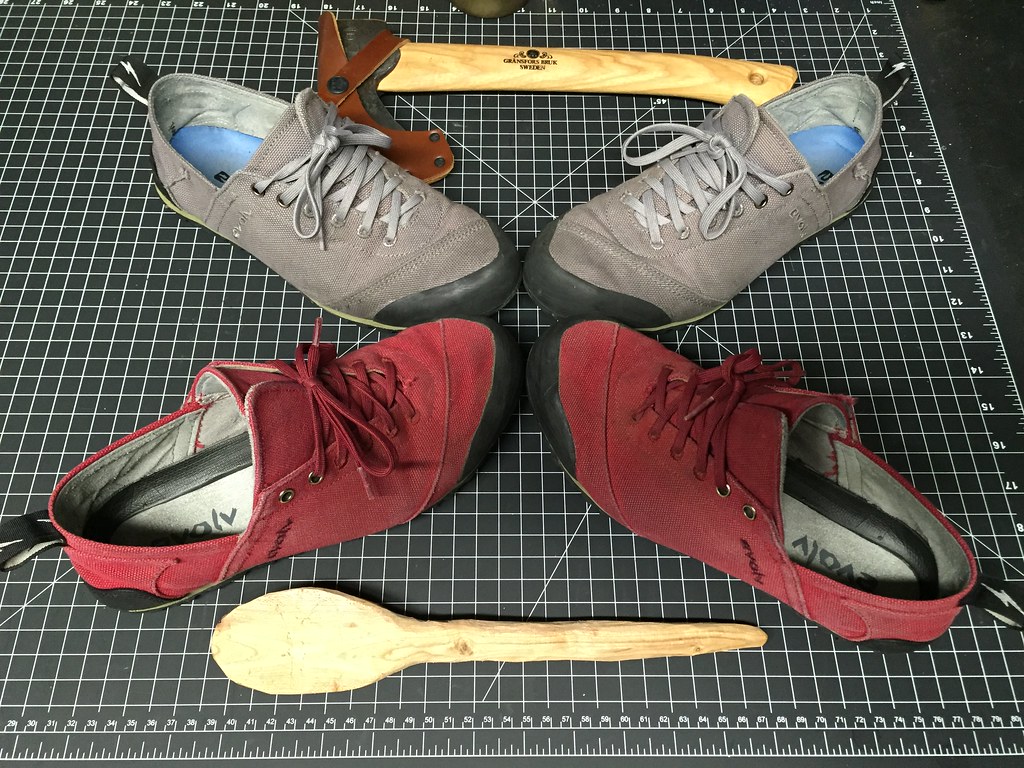
Cruzer

Evolv


One of the biggest dilemmas for me this year was the choice of shoes/pedals for the  Oregon Outback.  I have had great luck with clip-less  pedals and Sidi cycling shoes, so going with flats felt like a big risk.  I knew that we wouldn’t go more than 100 miles in any one day, but we would be doing it for 4-6 days straight.

On the other hand, I didn’t relish the thought of running around in cleats on rough ground for the better part of a week.  They add a certain amount discomfort: slippery footing in some situations, and “duck walking” on the ground.  They also introduce unnecessary complexity and technical failure risk if a cleat gets damaged, or a shoe gets lost.

On flat pedals, at least I could comfortably use sandals or bare feet (in a pinch).

I rode on flats for the most part all winter and spring before the ride, with a max distance of about 50 miles.  No problems. I have had occasional knee pain that has developed in the past over longer miles, but I was not as worried about it in this case.  Both my clip-less setup (SpeedPlay Frogs, Sidi Spider SRS) and flats give my knees plenty of float.  I seem to have had the most pain on a relatively locked in SPD setup.

Long story short – flat pedals were great, thin approach shoes were comfy as hell.

About the setup I used:

  • VP VP-001 “Thin Gripster” pedals
  • Evolv Cruzer “approach” shoes

Pedals: Watch your shins on these pedals – they are grabby and have sharp edges, but after a few nicks, you figure out how to stay away from them.  They lock your foot in really well – there were quite a few “holy crap” bumpy, loose, fast downhills we had to traverse, and I never lost my foot on the pedal – something that has happened to me on other pedal/shoe combos, and scary when you are rocketing downhill on single track or loose fire roads.  These guys just work, and have a large platform to find purchase on.

Shoes:  I’ve got 3 pairs of these – they are the most comfy shoes out-of-the-box I’ve yet encountered.  They are a minimalist approach shoe, but are runnable.  They wear well – I still use all three pairs, and two pairs have gone on several off-road adventures.  Oh yeah – they are fairly inexpensive, too…

I also used some Echo sandals for part of the day when we were in the hotter, more exposed sections of the trail, but I mainly went this route because I had gotten the Cruzers wet, and wanted to dry them out on the back of my bag.  This is an added benefit of flats – spare footwear just works.

After several days on the dusty trails, my feet felt great – no pains or aches, and my knees were fine for the distance.  I hope other folks try out this sort of combo – the cycling community still really pushes clip-less combos for “comfort”.  While some may need an extra stiff sole, I think this may have evolved due to the tiny surface area on most clip-less pedals.  Try some big, flat pedals – you may be surprised…

That’s it for now.  Let me know if you have found similar flat pedal/shoe combos you like.

jbt-2014-01-08-9

VP 001 Pedal

Posted by Brian Hanson | Filed under Cycling, Enduro Offroad

≈ 8 Comments

← Older posts
Newer posts →

Flickr Photos

BH-68.jpgBH-67.jpgBH-66.jpgBH-65.jpgBH-64.jpgBH-63.jpgBH-62.jpgBH-61.jpgBH-60.jpgBH-59.jpg
More Photos

Archive

  • August 2020 (1)
  • March 2018 (1)
  • January 2018 (1)
  • July 2017 (1)
  • June 2017 (1)
  • May 2017 (1)
  • February 2017 (1)
  • December 2016 (1)
  • November 2016 (1)
  • August 2016 (2)
  • March 2016 (1)
  • January 2016 (6)
  • December 2015 (2)
  • November 2015 (1)
  • June 2015 (5)
  • May 2015 (1)
  • April 2015 (1)
  • March 2015 (2)
  • January 2015 (2)
  • December 2014 (2)
  • November 2014 (2)
  • October 2014 (2)
  • September 2014 (2)
  • August 2014 (1)
  • July 2014 (1)
  • June 2014 (1)
  • May 2014 (2)
  • April 2014 (5)
  • March 2014 (4)
  • February 2014 (4)
  • January 2014 (6)
  • December 2013 (1)
  • November 2013 (2)
  • October 2013 (2)
  • September 2013 (1)
  • August 2013 (1)
  • July 2013 (2)
  • May 2013 (6)
  • April 2013 (1)
  • March 2013 (6)
  • February 2013 (2)
  • January 2013 (7)
  • December 2012 (5)
  • November 2012 (2)
  • October 2012 (2)
  • September 2012 (3)
  • August 2012 (3)
  • July 2012 (1)
  • June 2012 (4)
  • May 2012 (7)
  • April 2012 (1)
  • March 2012 (1)
  • February 2012 (4)
  • January 2012 (5)
  • December 2011 (6)
  • November 2011 (4)
  • June 2011 (2)
  • May 2011 (4)
  • March 2011 (2)
  • February 2011 (4)

Enter your email address to follow this blog and receive notifications of new posts by email.

Join 96 other subscribers

Blog at WordPress.com.

  • Subscribe Subscribed
    • Cycle Seattle
    • Join 96 other subscribers
    • Already have a WordPress.com account? Log in now.
    • Cycle Seattle
    • Subscribe Subscribed
    • Sign up
    • Log in
    • Report this content
    • View site in Reader
    • Manage subscriptions
    • Collapse this bar
 

Loading Comments...