• About Me

Cycle Seattle

~ Posts on bikes

Cycle Seattle

Tag Archives: Seattle

Snoqualmie Pass Tires on the Miyata

11 Friday Sep 2026

Posted by Brian Hanson in Builds, Cycling, Northwest

≈ Leave a comment

Tags

bicycle, bike, commute, compass, cycling, Miyata, rene herse, Seattle, tires, triplecross


Took the Miyata out for a Seattle loop: Golden Gardens, Ballard, across the locks, and into Free Range Bicycles. Picked up a pair of Rene Herse Snoqualmie Pass Endurance — the 700×44s I’d been hunting from my favorite LBS (Hi Shawna!).

Endurance casing instead of Extralight. Still a light folding tire, a bit more protection for tubes on these older clincher rims. Feels right for this bike. This will be the first bike in a while that I run with tubes. They only measured out to 39.5mm initially. This is only 3mm more than the Barlow Pass “38’s” I have on my Homer. It will be interesting to see if these stretch.

At this point I don’t mind them being a bit shorter as the top tube is touching the taint when I swing a leg over…

Good day. Bike’s ready for real miles now.

Tire hunt for the Miyata — 700×44 max

08 Tuesday Sep 2026

Posted by Brian Hanson in Builds, Cycling

≈ 2 Comments

Tags

bicycle, bike, cycling, Seattle, tires


The Miyata Triplecross is almost ready — still needs tires. Clearance tops out around 700×44. The rims are not tubeless-compatible, so I’m fine running tubes. I’m still looking at light folding casings (including tubeless-ready models that work fine with tubes).

I have a soft spot for the Rene Herse and Schwalbe lightweight stuff. Wanted to put a short list up and hear what you’d run.

In the running

Rene Herse Snoqualmie Pass 700×44 — Exact size. Folding, tubeless-compatible, great with tubes. Standard casing is about 380 g; Extralight around 335 g if I want the softest ride. Local Cascade pass name doesn’t hurt. This is the front-runner in my head.

Schwalbe — No true 44 that I can find right now. Closest: G-One Allround in 700×40 or 700×45 (45 may be tight on this frame), or a Marathon Almotion around 700×40 for a more touring/conventional setup. Happy to hear other Schwalbe picks in this width band.

WTB Byway 700×44 — Fast center, light gravel shoulders. Folding, tubeless-ready, works with tubes. More “pavement plus a little dirt” than a knobby.

Panaracer GravelKing SK — 700×43 sits under the limit. Familiar Japanese folding casing, TLR, solid all-road option. Also scratches the old Pasela which seem to be discontinued.

Tufo Gravel (Speedero / Thundero / Swampero) 700×44 — Light folding TLR casings that also run well with tubes. Speedero if it’s mostly road; Swampero if I want more bite.

What I’m asking

If you’ve run any of these at ~42–44 mm on older clincher rims (tubes), what stuck? Anything I’m missing that’s light, folding, and happy under 44? I’ve been out of the tire game for a bit and it seems that a lot has changed in the past 5 yrs.

Comment here or poke me elsewhere — I’ll pick something and get this bike out for real miles.

Image

Winter Cycling

20 Saturday Jan 2018

Tags

bicycle, bike, cycling, kona, MTB, schwalbe, Seattle, Trillium Reserve, Whidbey Island


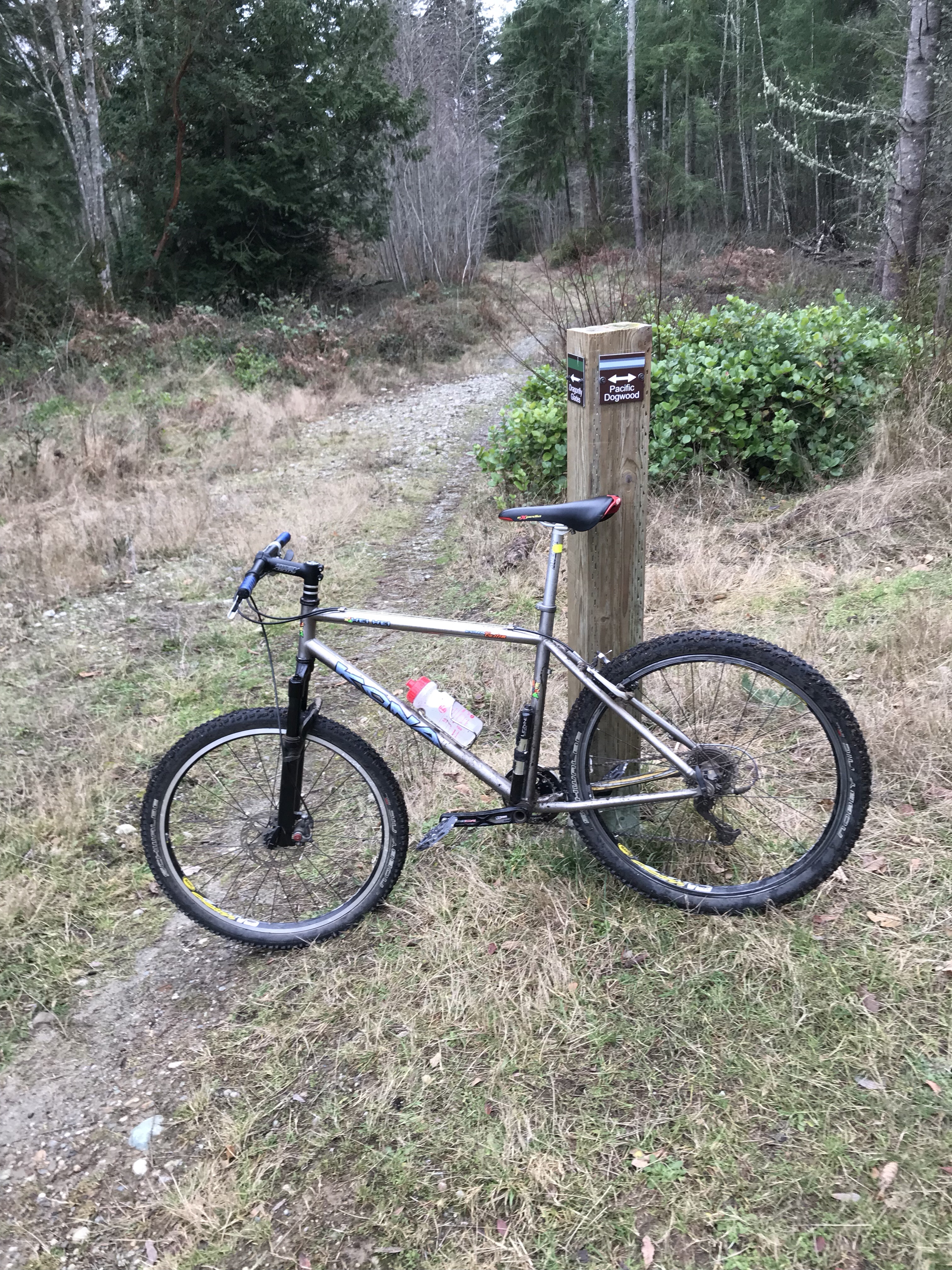
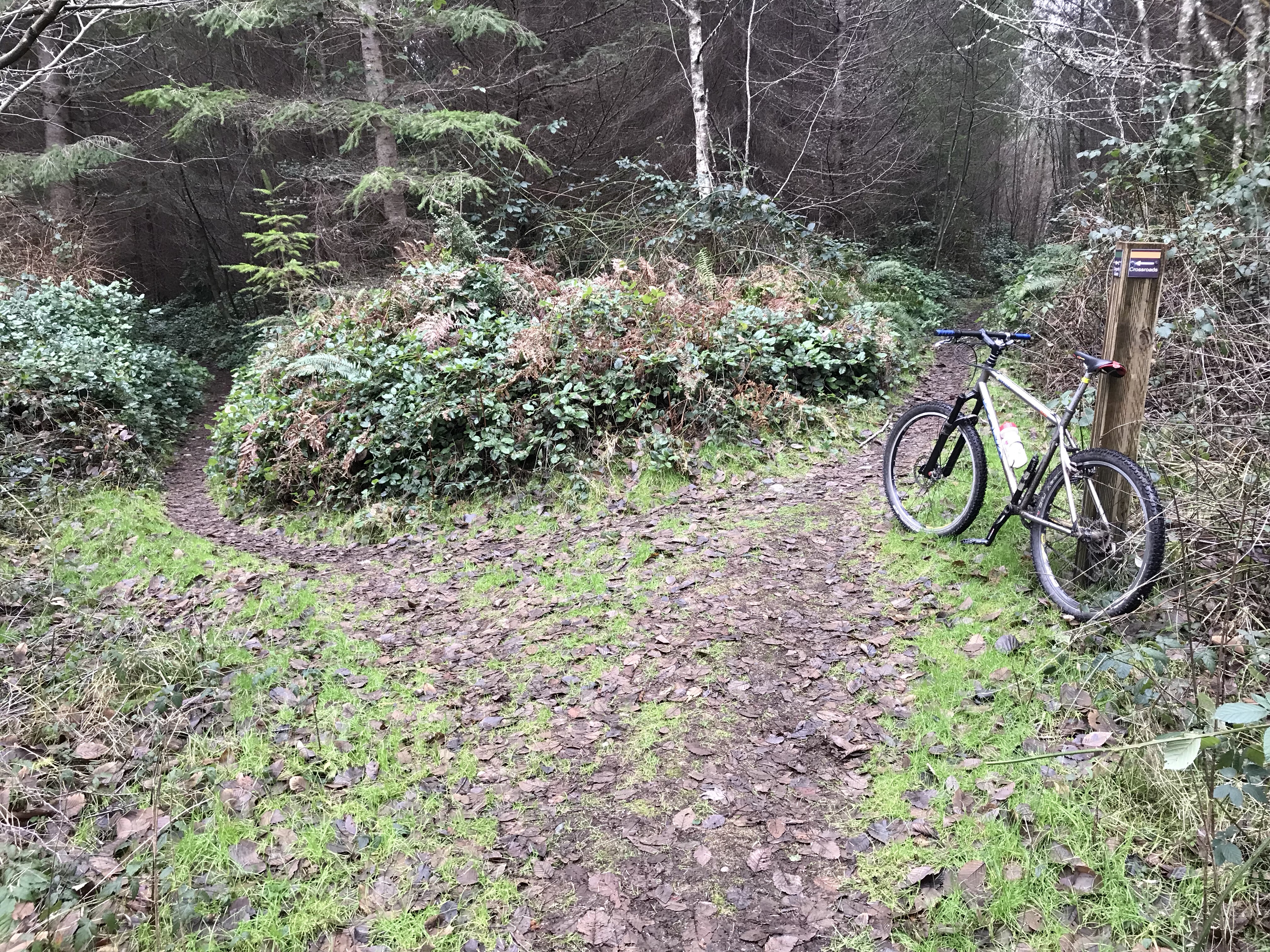
In an attempt to get out for a quick ride today, I chose the MTB. I found reasonable trails even in the winter in the Trillium Park on Whidbey Island. I headed up the eastern edge on mostly damp leafy single track until I reached the access road on the north end. After the climb, the real fun starts. There were a few trees down that I had to stop and hop for, but it was a good flow, nevertheless.

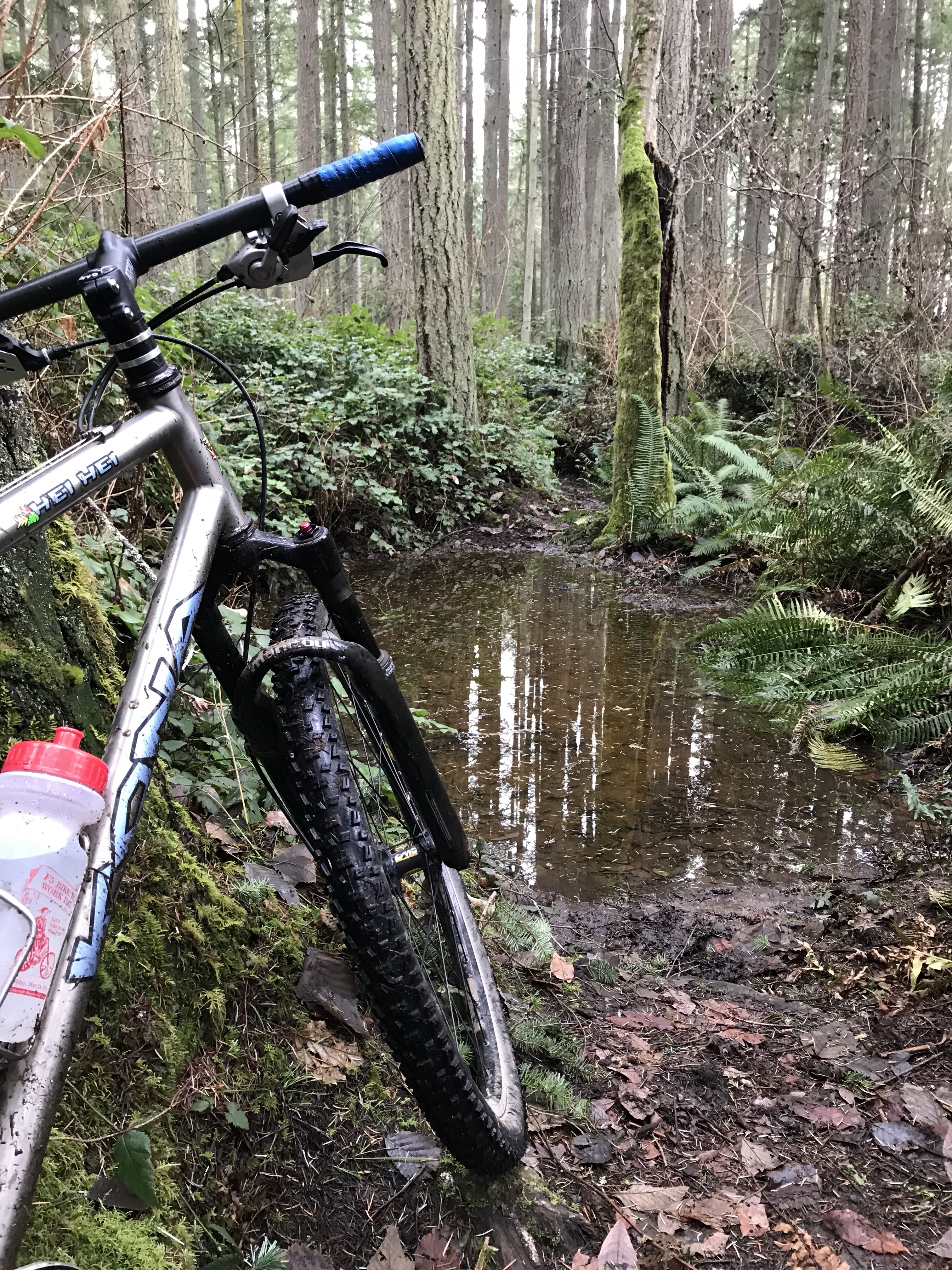
On the downhill nearing my favorite twisty section, I ran into a hiker who warned me that it was “wet up ahead”. I soon ran into a pond where the trail should have been. Being at least a foot deep with no way around, I abandoned and headed home.

The Kona was impressive as always. After a nice wash and oil, it’s ready for the next adventure.

Posted by Brian Hanson | Filed under Cycling

≈ Leave a comment

Image

Trail Riding

06 Wednesday Jan 2016

Tags

a. homer hilsen, bicycle, bike, commute, Cycles Toussaint, cycling, front bag, low-trail, randonneur, rivendell, Seattle, Velo Routier


I want to go into a bit more detail on what I’ve found in experimenting with a more traditional low-trail bike like the Vélo Routier, and compare it to the mid trail Rivendell A. Homer Hilsen from my last post.  I have these bikes set up nearly the same.  Both use 42cm Noodles, Compass cranks, and VP pedals (not shown), and Selle Anatomica Titanico saddles.
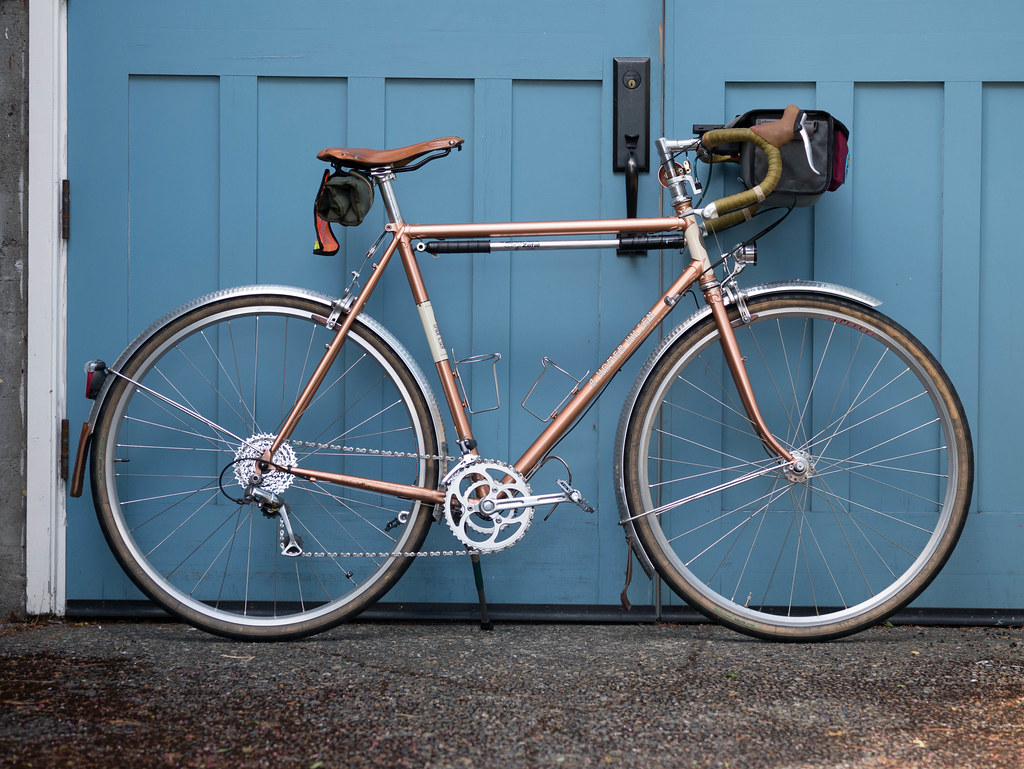
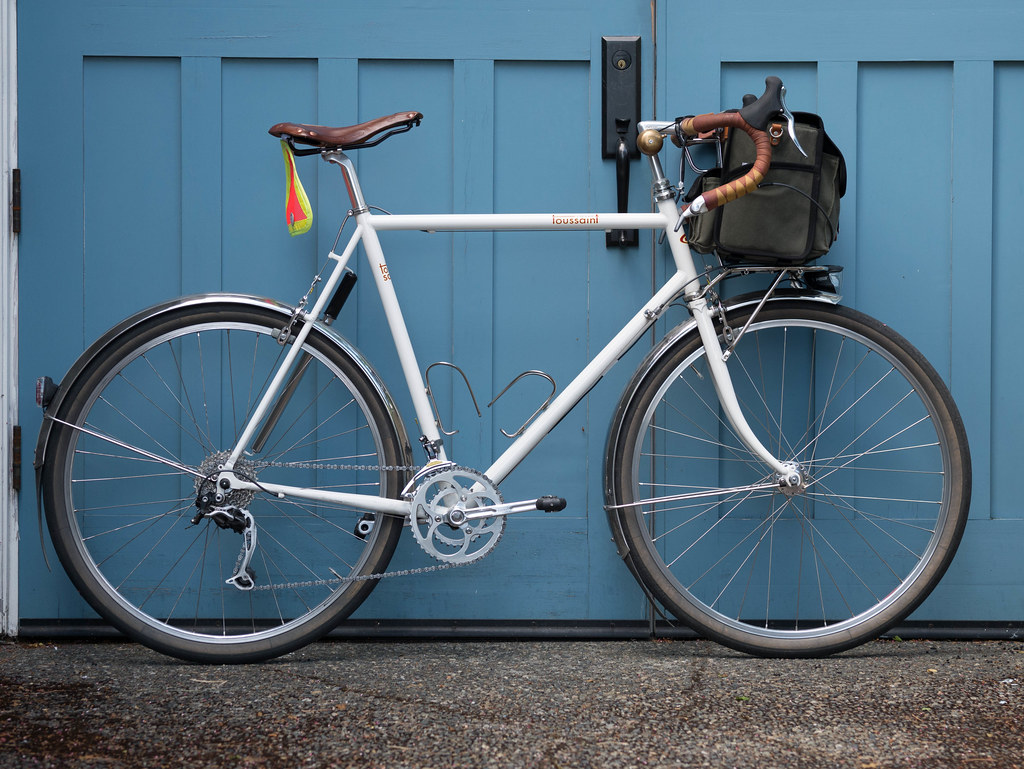
BH-5.jpg BH-8.jpg

As the side view shows, the main difference is the fork rake and head tube and seat tube angles giving the bikes a slightly different geometry.  The Toussaint has slightly steeper angles, and more rake giving it trail around 30mm, whereas the Hilsen is more relaxed with trail around 55-60mm.  Yes, the Vélo is 650b and the Hilsen is 700c, but both bikes use light, supple Compass tires (tubeless even).  The tire volume has a definite impact on the ride, but it doesn’t really relate to how the trail aspect affects the feel of the bike, at least not in the detail I’ll get into here.

Steering Curves

You can definitely tell the difference in the feel that the geometry creates when doing tight turns on the bike.

I’ll start with a spot in my commute that “pushes” technique a bit. There is a railroad crossing on my daily ride where I perform a fairly tight “S” turn that has fences on either side to keep me honest.  The Hilsen requires more thought and body lean.  The Vélo Routier requires less body, and steers the curves easier.  This is the case no matter the load on the bikes for the most part.

On the other hand, when I put the Hilsen into a curve, it tracks it.  When I put the Vélo Routier in, it will still respond to inputs.  This can be good or bad.  I would say that on the Routier, I have to stay on top of steering all the time, whereas on the Hilsen, I have to be a little more planned up front, but when committed, it requires less concentration from me.

Front Weighted Loads

The Routier is much less concerned if there is weight in the front.  The bike doesn’t wag from side to side (wheel flop) when there is significant load, and when I park it with the front bag, it doesn’t sway over to the side.  The times I’ve actually found this to be nice is when I’m parking the bike, and when I’m carrying a 10+ pound load (which is actually very rare for me).

My typical rando load is probably at most 5 pounds in my front bag with a layer, extra gloves, and food. This is easily handled with little problem on the Hilsen when similarly front bag equipped.

Tracking

The Hilsen always wants to go straight at speed – there is more gyro stabilization effect with this geometry.  This helps when you want to be minimal in steering input.  Examples: curves, laziness, riding no-handed.  The Routier goes where your hands move it to.  This isn’t great if you are tired or distracted.  I’ve had a few more close calls on the Routier nearly going on a temporary off-road excursion.  This has been at normal riding pace: 12-17 mph.  I really noticed this “ultra responsive” steering at the end of a 300k when I was tired, and couldn’t seem to keep the bike going in a straight line without undue effort.  I remember thinking to myself that the low trail was supposed to be “easier”, but in this case, under fatigue, it was actually the opposite.  This is also a complaint generally fielded against higher trail bikes – that they tend to wander when climbing at slow speeds.

I’ve heard that wind gusts can really upset a higher trail bike, but I haven’t experienced that yet.  Gusts tend to bother me on either bike, but not uncontrollably so.

UPDATE: a comment left by a reader asked about high speed descent handling between the bikes.  I have noticed very little differences here – when moving at speeds over 20mph, both bikes feel stable.
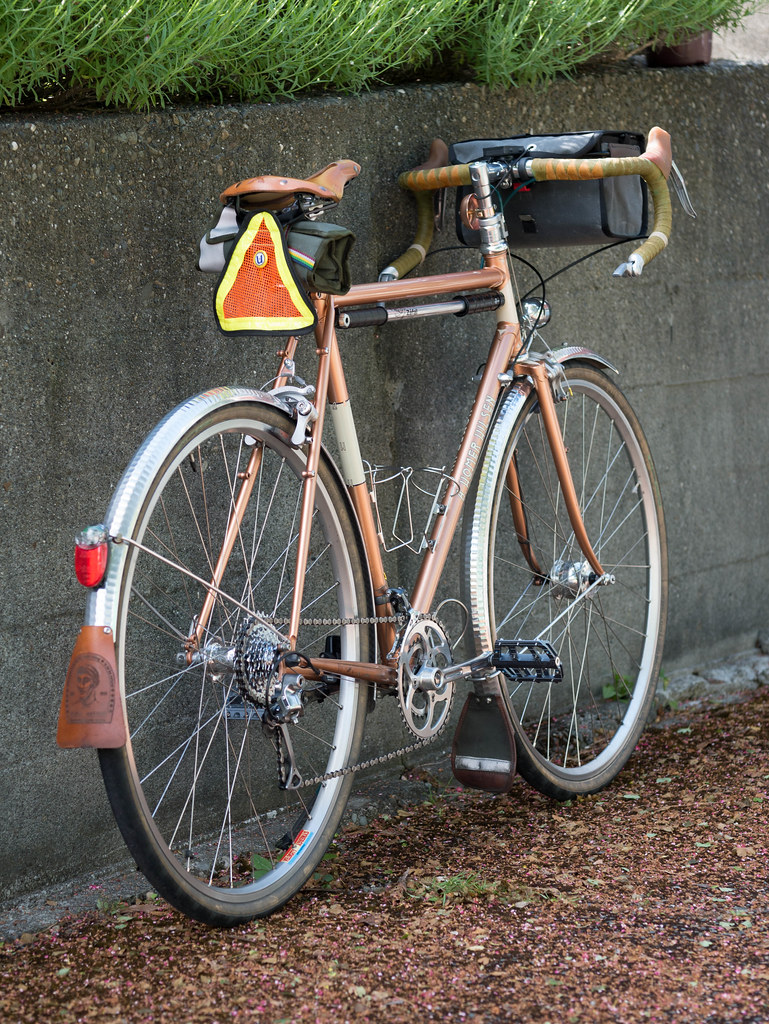
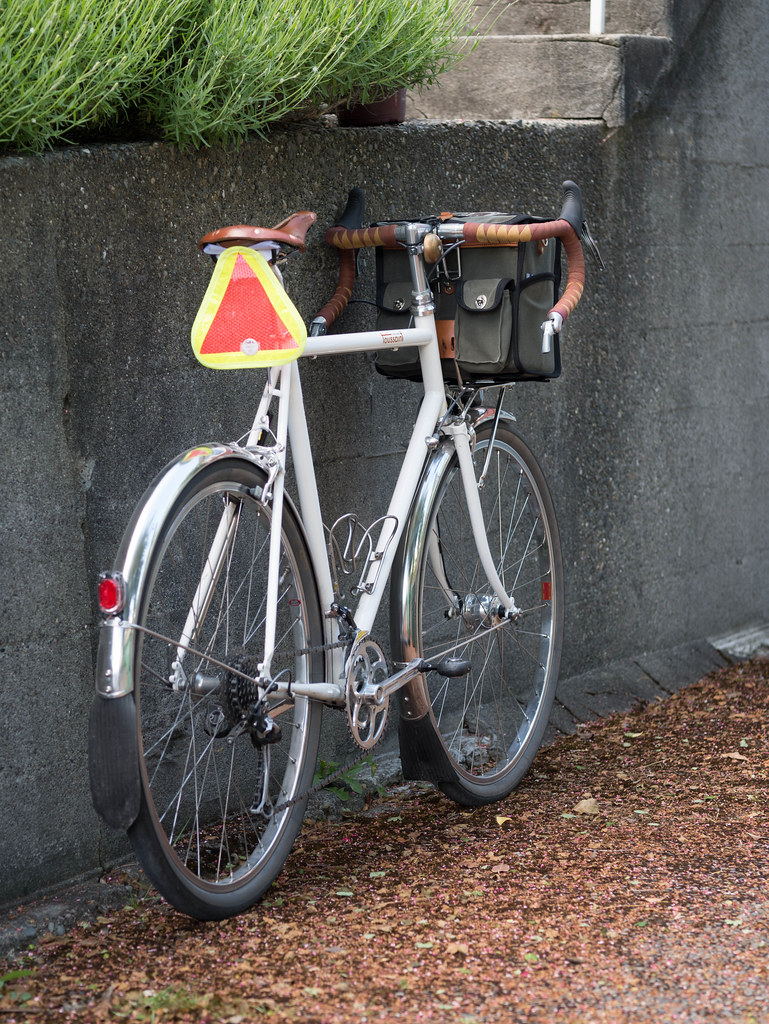
BH-2.jpg BH-7.jpg

Commuting

I find no real difference other than the amount of weight you want to carry. And, this only matters if you really want to carry a lot of weight in the front.  I tend to hate on rear rack and pannier combos as I don’t like the tail wagging the bike feel, and the dirt on the panniers from road spray. Front bags are awesome for keeping your stuff accessible and clean.  I don’t typically carry a lot of weight on my commute.  I keep heavy clothes in the office, and only occasionally bring an iPad or MacBook on the commute.  I will sometimes pick up beer, or other heavy items on the ride home, however, but either bike manages this for a few miles with no real problems.

Balance/CoG

Now here is something I’ve noticed more as I ride the Toussaint, and this is more obvious when I try to ride no-handed.  I feel like my center of gravity is higher on the low-trail bike.  It sort of feels like I’m sitting up higher and closer to the bars – more of an “on top” feeling rather than an “in the bike” feeling.  I would just attribute this to the sharper seat tube angle – not even something that necessarily contributes to the trail number, but is part of the geometry difference.

Summary

Different trails for different folks with different needs.  If you are a long-distance or endurance rider who carries a good load, is alert even after hours in the saddle (think 12+ hours), and you like to have a very precise feel for control on steering movements – go with a low trail ride.  If you are regularly carrying large loads, and want them to stay clean and dry, go low trail.  If you don’t mind carrying load in the back – it doesn’t really matter then.

If you like to ride long distances but want to be able to do lots of restful no-handed riding, and you like to zone out a bit more – go with a mid-trail bike.  If you are a commuter and want a bike that doesn’t flop over and pull the bike down when you have stuff in the front basket/bag, get a low trail bike.

If you like to ride big tires with fenders, or have bigger feet, and hate toe-overlap, you may find you will have less on a low-trail bike as the fork is raked out more.  Another consideration.

I find both of these bikes to be great brevet bikes.  They are also great commuters.  I would give the nod slightly to my Hilsen based on my riding style, preferences, and loaded weight characteristics.  Someday, I’ll have to “pull a Chen” and “get another Hilsen” that is modified to low trail and then do a test, but that sounds like a lot of work.  I’m moving out of my tweaking phase.  My real recommendation is to get two bikes, one low and one mid/high, and find out what you prefer.  Nobody can really just tell you – it helps to experience it yourself.
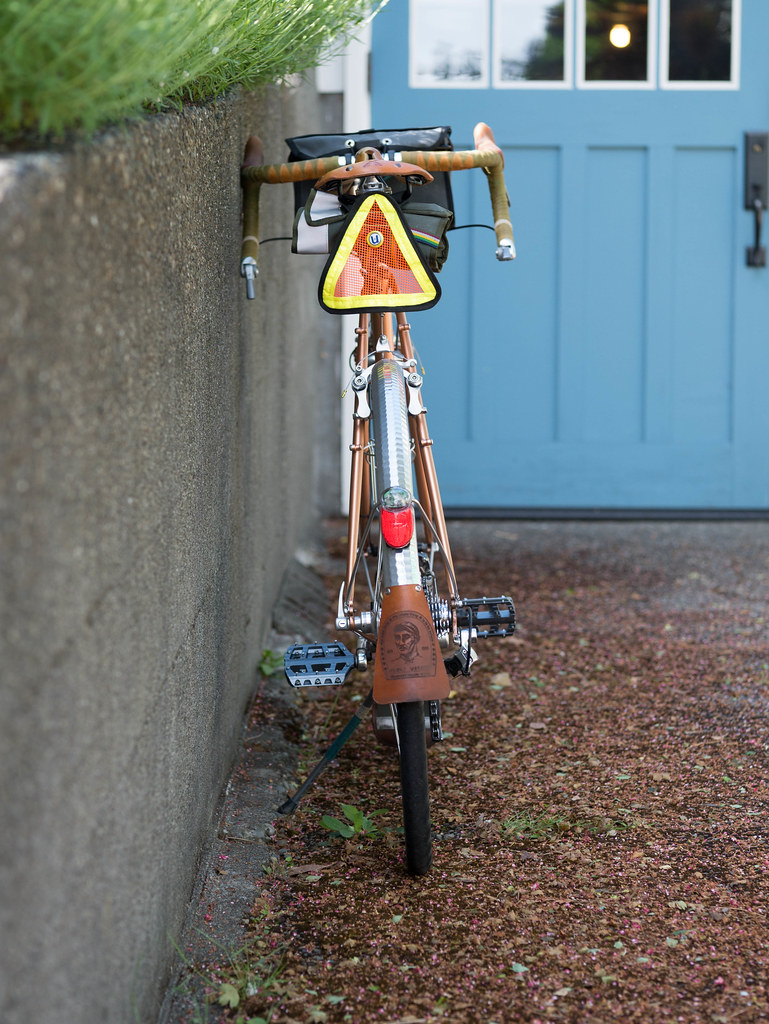
BH-4.jpg

Posted by Brian Hanson | Filed under Cycling, Randonneuring

≈ 10 Comments

Image

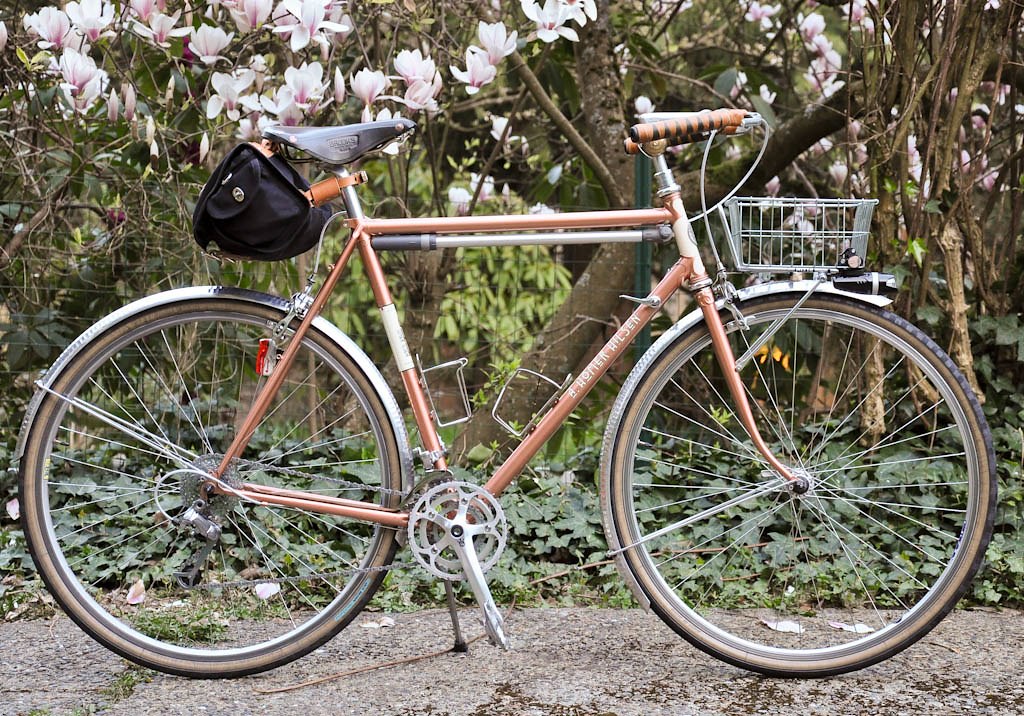
A. Homer Hilsen 7-year Review

04 Monday Jan 2016

Tags

a. homer hilsen, ahh, bike, commute, cycling, harlequin wrap, nitto, porteur, randonneur, rivendell, Seattle


My first real thoughtful bike purchase was the Rivendell A. Homer Hilsen.  Color – metallic copper – one of the web frame specials in 2009 shortly after I moved back to Seattle from a brief 18-month foray to my childhood home of Minnesota.  I had been commuting on a ’96 Kona AA that I was pretty much done with.  The aluminum frame never felt right – too stiff. I was ready for a real road bike after spending much of the prior 20 years on a mountain bike.

Hilsen-1

2nd Build – still a favorite

I did a lot of research, but after I found the Rivendell site, started reading Sheldon Brown and Grant Petersen’s opinions, and did some test rides on a local friend’s vast collection of Riv bikes, I was smitten.  I recall going to the Seattle Bike Show in 2008 and walking around forlorn, seeing nothing attractive.  At all.

At that point, I knew a couple things about myself:

  1. Steel felt right.  I grew up riding this material.  My Raleigh Reliant, and Stumpjumper Pro (’91) were my benchmark rides.
  2. I wasn’t planning to pick up racing.  I am a recreational and practical cyclist.
  3. Damn those lugged frames were pretty!  They really hit a “homer” in terms of where my aesthetic sensibilities were concerned.
  4. I wanted to build this bike myself from the frame up.

I started watching the Riv site and decided the copper Hilsen was the one.  It was a 59cm frame, and although I would probably fit up to a 61cm, this was as big as I wanted to commit to.

After a few months of collecting the parts and tools needed to put this together, I took it for the first ride and was amazed at the effortless speed compared to my mountain bikes. At about the same time, I had also stumbled on the  RBW owners bunch online community, which helped me navigate a first bike build, as well as sharing lots of good technical advice.

Here was a large community of like-minded folks generally oohing and aahing all the builds folks were doing.  This tight-knit community is one known for being a polite and caring group, and I’m happy to count many of the folks there as friends.

Untitled

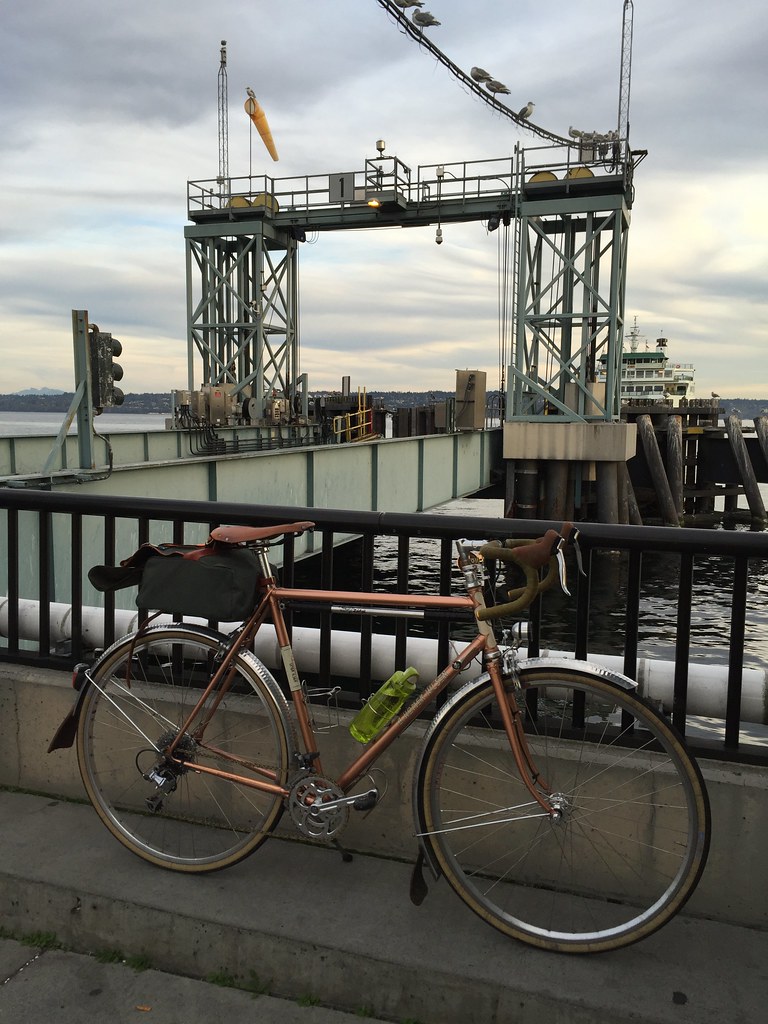
Favorite Bike in Current Config

The Hilsen took me on my first 100k brevet, and then my 200k.  Then my 300k.  It helped me learn that I like the Selle Anatomica Titanico saddle best on anything over 100 miles.  It showed me that clipless pedals were not necessary anymore.

I briefly became caught up in the low-trail Jan Heine camp, and picked up another rando bike (the Toussaint), but after all these years, the one bike I still enjoy the most is the A. Homer Hilsen.  It is still as lovely as ever, and gaining beausage every year.  It still gets more comments on my daily commute, rain or shine.  After riding other bikes for several months, and then coming back to this one, it still feels “just right”.  The ride is smooth, predictable, natural.  I never feel like it has quirks, defects, or limitations that I’ve noticed on lesser bikes.

It has done brevets, snowy singletrack(!), loaded commutes, and just riding trips.  Handled ’em all with aplomb.  ’nuff said…

Posted by Brian Hanson | Filed under Cycling, Northwest, Randonneuring

≈ 15 Comments

← Older posts

Flickr Photos

Miyata TriplecrossMiyata TriplecrossMiyata TriplecrossMiyata TriplecrossMiyata TriplecrossMiyata TriplecrossMiyata TriplecrossMiyata TriplecrossMiyata TriplecrossMiyata Triplecross
More Photos

Archive

  • September 2026 (3)
  • August 2020 (1)
  • March 2018 (1)
  • January 2018 (1)
  • July 2017 (1)
  • June 2017 (1)
  • May 2017 (1)
  • February 2017 (1)
  • December 2016 (1)
  • November 2016 (1)
  • August 2016 (2)
  • March 2016 (1)
  • January 2016 (6)
  • December 2015 (2)
  • November 2015 (1)
  • June 2015 (5)
  • May 2015 (1)
  • April 2015 (1)
  • March 2015 (2)
  • January 2015 (2)
  • December 2014 (2)
  • November 2014 (2)
  • October 2014 (2)
  • September 2014 (2)
  • August 2014 (1)
  • July 2014 (1)
  • June 2014 (1)
  • May 2014 (2)
  • April 2014 (5)
  • March 2014 (4)
  • February 2014 (4)
  • January 2014 (6)
  • December 2013 (1)
  • November 2013 (2)
  • October 2013 (2)
  • September 2013 (1)
  • August 2013 (1)
  • July 2013 (2)
  • May 2013 (6)
  • April 2013 (1)
  • March 2013 (6)
  • February 2013 (2)
  • January 2013 (7)
  • December 2012 (5)
  • November 2012 (2)
  • October 2012 (2)
  • September 2012 (3)
  • August 2012 (3)
  • July 2012 (1)
  • June 2012 (4)
  • May 2012 (7)
  • April 2012 (1)
  • March 2012 (1)
  • February 2012 (4)
  • January 2012 (5)
  • December 2011 (6)
  • November 2011 (4)
  • June 2011 (2)
  • May 2011 (4)
  • March 2011 (2)
  • February 2011 (4)

Enter your email address to follow this blog and receive notifications of new posts by email.

Join 94 other subscribers

Blog at WordPress.com.

  • Subscribe Subscribed
    • Cycle Seattle
    • Join 94 other subscribers
    • Already have a WordPress.com account? Log in now.
    • Cycle Seattle
    • Subscribe Subscribed
    • Sign up
    • Log in
    • Report this content
    • View site in Reader
    • Manage subscriptions
    • Collapse this bar
Loading Comments...